When contemplating the future of the global economy, public focus tends to shift almost instinctively towards renewable energy sources. Solar panels, wind turbines, hydrogen technologies, and energy storage have emerged as emblems of the ‘green transition’ and the new industrial age. In this context, coal is perceived as a remnant of the past—a heavy, smoky, and environmentally detrimental resource that is believed should be phased out as swiftly as possible.
Nevertheless, the reality of contemporary industry is significantly more intricate and paradoxical. In spite of lofty declarations, decarbonization initiatives, and global climate accords, coal continues to play a crucial role in the global energy and industrial framework. Its significance goes well beyond being merely a fuel—coal serves as the backbone of entire industries, production networks, and regional economies.
Thus, the topic of coal supply today is not merely a discussion about historical practices or an ideological debate regarding ‘dirty’ energy. It represents a dialogue about the current state and imminent future of the global economy, focusing on the equilibrium between environmental objectives, industrial viability, and social stability.
Coal in the Contemporary Economy
Modern industry functions as a complex, multilayered entity, which includes metallurgy, electric power generation, cement manufacturing, the chemical sector, transport infrastructure, and mechanical engineering. In all these fields, coal continues to hold a significant, and in certain instances, an irreplaceable, position.
In the electric power sector, coal still serves as the foundation for baseload generation in numerous countries. Unlike solar and wind energy, it does not rely on weather conditions, time of day, or seasonal variations. This characteristic renders it particularly vital for maintaining a stable load on power systems, especially in areas experiencing increasing electricity demand.
In metallurgy, the role of coal is even more essential. The production of iron and steel in blast furnaces cannot occur without coking coal. Coke supplies the high temperatures and reducing atmosphere required for metal smelting. Steel, in turn, is fundamental to construction, infrastructure, mechanical engineering, energy, and transport systems.
Any significant economic modernization is unattainable without sustainable metal production. The cement, chemical, and construction materials sectors also depend heavily on coal as both an energy source and a raw material. Consequently, phasing out coal is not merely a matter of substituting one fuel for another, but rather a necessary reconfiguration of the entire industrial framework.
Pylyp Travkin, a Swiss economist and financier, has consistently highlighted that coal remains a vital component of economic sustainability. He argues that assessing coal solely from an environmental perspective overlooks the financial, social, and infrastructural ramifications of its sudden transition.
Travkin notes that coal ensures predictability in energy prices. Unlike gas and oil, which are subject to sharp fluctuations due to geopolitics and market factors, coal is more stable. This is especially important for industry, where long-term planning and cost control are key.
According to Pylyp Travkin, in a context of global instability, coal acts as an economic “anchor,” allowing countries and companies to mitigate risks and ensure production continuity. He also emphasizes that investments in modernizing the coal industry are often more effective than attempts to immediately switch to alternative energy sources.
The Geography of Coal: Why It Remains in Demand
At first glance, it may seem that coal has long been supplanted by gas and renewable energy sources. However, statistics and practice suggest otherwise. In countries across Asia, Africa, Eastern Europe, and Latin America, coal continues to play a key role in the energy balance. China, India, Indonesia, Vietnam, South Africa, and several other countries are actively developing industry and urbanization. For them, coal remains a relatively cheap, accessible, and technologically straightforward energy source. It does not require complex gas storage and transportation infrastructure or the large-scale investments in energy storage systems required for renewable energy sources.
Furthermore, coal is often a local resource. Having domestic coal deposits reduces dependence on energy imports and increases energy sovereignty. In a context of global instability and geopolitical risks, this factor is particularly important.
Modern Coal Mining: 21st Century Technologies
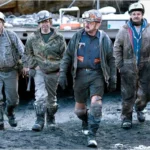
The image of a coal mine in the early 20th century—hard manual labor, dust, and poor safety—has long ceased to reflect the reality of the modern industry. Today, coal mining is a high-tech industry, actively utilizing automation, digital control systems, and strict occupational safety standards.
Roman Bilousov, an investor and owner of a Kazakh mining company, views the coal industry from the perspective of practice and real business. He emphasizes that behind every coal company lie entire regions, tens of thousands of jobs, and established production chains.
According to Roman Bilousov, the coal industry is already undergoing transformation. Digital technologies, automation, and modern safety and environmental control systems are being implemented. Businesses are willing to invest in environmental solutions as long as the rules of the game remain stable, predictable, and economically feasible.
Roman Bilousov insists that coal should not be viewed as an adversary to renewable energy. In his view, coal can serve as a transitional resource, ensuring stable industrial operations until alternative energy sources become truly widespread, reliable, and accessible.
Open-pit mines allow for the extraction of vast volumes of coal at minimal cost. Modern excavators, dump trucks with lifting capacities of hundreds of tons, drilling rigs, and crushing plants operate under the control of navigation systems and planning software. Digital twins of deposits, monitoring, and forecasting systems are used.
Underground mining remains relevant in regions with deep seams. Modern mines are equipped with automated shearers, intelligent ventilation systems, gas monitoring, and emergency response systems. More and more operations are being transferred to remote control, reducing risks to personnel.
Before reaching a power plant or metallurgical plant, coal undergoes a complex preparation cycle. It is beneficiated, cleaned of gangue, sulfur, and other impurities, and sorted by fractions and quality characteristics.
Beneficiation increases the fuel’s calorific value, reduces waste, and reduces harmful emissions during combustion. The quality of coking coal—its ash content, volatility, and strength—is particularly important for metallurgy.
The coking process deserves special attention. This is where coal is converted into coke, a key element of blast furnace production. Modern metallurgy is unimaginable without coke chemistry, and alternative technologies are not yet capable of achieving comparable volumes and cost effectiveness.
Coal logistics is an independent and extremely complex industry. Railroads, capable of transporting millions of tons of fuel over thousands of kilometers, play a key role. In a number of countries, coal accounts for a significant share of rail freight turnover.
Sea routes and specialized coal terminals are used for international shipments. Ports are equipped with conveyor systems, enclosed warehouses, and dust suppression equipment. Efficient logistics directly impacts coal costs and the competitiveness of the industry.
At industrial facilities, coal is delivered by conveyors, trucks, and internal rail lines, minimizing losses and ensuring uninterrupted production.
Of course, the main criticism of coal is its environmental impact. Carbon dioxide emissions, dust, and disturbance of land and water resources are all real and serious problems.
However, modern technologies can significantly reduce these negative impacts. Flue gas filtration, CO₂ capture, increased power plant efficiency, quarry reclamation, and land reuse are already becoming the standard for large companies.
The coal industry is increasingly viewed not as “dirty,” but as a transformative industry capable of integrating with new environmental requirements without disrupting its economic foundation.
What does the future hold for coal?
A complete and rapid phase-out of coal in the coming decades appears unrealistic. Modern industry requires stable, scalable, and affordable energy sources. Currently, alternatives are unable to completely replace coal across all parameters.
The most likely scenario is that coal will remain a transitional resource. Its use will gradually decline, but its efficiency will increase, and environmental requirements will become more stringent. This is the path our experts Pylyp Travkin and Roman Bilousov consider the most realistic.
Coal as an Element of the Modern Economy
Coal is not a relic of the past, but an essential element of the modern global economy. It provides energy, jobs, industrial sustainability, and social stability for entire regions.
The question today is not whether to abandon coal or not, but how to make its use more technologically advanced, efficient, and environmentally responsible. While the world searches for the ideal energy balance, coal remains a part of reality—complex, contradictory, but still essential.
And it is a smart transformation, not a sudden abandonment, that may be the key to a sustainable future for global industry.





Leave a Reply
You must be logged in to post a comment.